Building Your Emergency Food Storage
Learn how to build a 3, 6, or 12-month emergency food storage system without breaking the bank. This practical guide walks you through shelf-stable essentials, smart rotation strategies, and realistic budget-friendly methods to create true food security for your family—one step at a time.
PREPPING
11/24/20258 min read
You know that nagging feeling in the back of your mind? The one that whispers "what if" every time you see empty grocery store shelves or hear about another supply chain hiccup? Yeah, I get it. That's exactly why you're here, and honestly, it's why I started taking food storage seriously too.
Let me tell you something right off the bat: building a solid food storage system doesn't mean you need to take out a second mortgage or turn your living room into a warehouse. It just means being smart, intentional, and a little bit strategic about how you stock your pantry.
So grab a coffee (or tea, I don't judge), and let's talk about how to build real food security without the overwhelm or the debt.
Why Food Storage Matters More Than Ever
Look, I'm not trying to be a doom-and-gloomer here, but let's be real for a second. We've all seen what can happen. Pandemic-related shortages. Natural disasters. Job loss. Economic uncertainty. Supply chain disruptions that leave entire sections of the grocery store looking like a post-apocalyptic movie set.
The thing is, our grandparents just called this "having a well-stocked pantry." Somewhere along the way, we got comfortable with running to the store every few days, and we forgot that having food security isn't paranoid—it's just practical.
A good food storage system gives you:
Peace of mind when unexpected stuff happens
Financial flexibility when money gets tight
Freedom from constant grocery store trips
Protection against price increases and shortages
Real security for your family's most basic need
The Three Levels of Food Storage (And Why You Need All Three)
Here's where most people get confused. They think food storage is just one thing, but really, it's three distinct layers that work together. Think of it like this: you wouldn't wear just a t-shirt in a blizzard, right? You'd layer up. Same concept here.
Your Working Pantry (The Daily Driver)
This is the food you actually eat, like, today and this week. It's the pasta in your cabinet, the canned tomatoes, the rice, the stuff you rotate through regularly. Most families naturally keep about 2-4 weeks of food in this category without even trying.
The goal here? Bump it up to a solid month's worth, but only of things you genuinely use. No weird canned meats you'd never touch unless zombies were literally at your door.
Your 3-6 Month Storage (The Buffer Zone)
This is where things get more intentional. You're stocking up on shelf-stable versions of your regular meals, plus some basics that'll last. We're talking canned goods, dried beans, rice, pasta, oats, peanut butter, and yes, some of those freeze-dried meals that are actually pretty decent these days.
This layer is your financial cushion and your emergency backup. Job loss? Covered. Can't get to the store for a few weeks? No problem. Prices skyrocket? You're sitting pretty while everyone else is panic-buying.
Your 12-Month+ Storage (The Long Game)
This is your deep storage—the stuff that lasts for years and sits quietly in the back until you really need it. Freeze-dried foods, properly stored grains, sugar, salt, oils, and foods specifically packaged for long-term storage.
Most people never get here, and honestly? That's okay. But if you want true food security, this layer is your insurance policy against the really big disruptions.
The Practical Approach: Starting Where You Are
Alright, let's get down to brass tacks. You're probably looking at your current pantry thinking, "How the heck do I turn this into 3-12 months of food storage?"
First, breathe. You're not doing this overnight.
Month 1-2: Build Your Foundation
Start with what you already eat. I mean it. Forget the fancy freeze-dried stuff for now. Just buy extra of what's already on your grocery list.
Action steps:
Each week, buy double of the shelf-stable items you normally purchase
Pick up extra canned goods when they're on sale (vegetables, fruits, beans, soups)
Grab an extra bag of rice, pasta, or oats
Add one or two "backup meals" in cans or boxes
By the end of two months, you should have a solid extra 2-3 weeks of food without spending much beyond your normal budget. See? Not scary at all.
Month 3-4: Get Strategic
Now you're going to start thinking more intentionally. Make a list of 10-15 simple meals your family actually likes that use mostly shelf-stable ingredients. For us, that's things like:
Spaghetti with jarred sauce
Rice and beans with canned vegetables
Chili (canned or from dried beans)
Oatmeal with canned or dried fruit
Soup and crackers
Mac and cheese with canned tuna or chicken
Once you have your list, start buying specifically for those meals. You want enough ingredients to make each meal 2-4 times. This is where you really start to see your storage grow.
Month 5-6: The 90-Day Mark
By now, you should be sitting pretty with a genuine 3-month supply. High five! This is where most people stop, and honestly, that's a solid achievement. You're better prepared than 95% of the population.
If you want to keep going (and I recommend you do), this is when you start adding some of the longer-term options and filling in gaps.
What Actually Goes In Your Food Storage?
Let's talk specifics, because "buy food" isn't exactly helpful advice. Here's the real breakdown of what works:
The Shelf-Stable Superstars
Grains and Starches:
White rice (lasts longer than brown)
Pasta in various shapes
Oats (steel-cut or rolled)
Quinoa
Flour (freeze for 48 hours first to kill bugs, then store airtight)
Proteins:
Canned chicken, tuna, and salmon
Canned beans (or dry beans if you know how to cook them)
Peanut butter (liquid gold in a jar)
Canned chili
Protein powder (surprisingly shelf-stable)
Fruits and Vegetables:
Canned tomatoes and tomato sauce
Canned vegetables (corn, green beans, peas, carrots)
Canned fruit in juice (not syrup—better for you and stores better)
Dried fruits
Freeze-dried vegetables
Fats and Oils:
Olive oil
Coconut oil (lasts forever)
Vegetable oil
Shortening
Comfort and Flavor:
Sugar and honey
Salt (you need more than you think)
Spices and seasonings
Coffee and tea
Cocoa powder
Bouillon cubes
Hot sauce (morale matters, people)
The Freeze-Dried Game-Changers
Okay, I used to think freeze-dried food was just overpriced camping meals. Then I actually tried some modern options, and I'll admit it—I was wrong. Sort of.
Good freeze-dried foods are:
Lightweight and space-efficient
Nutritionally solid
Actually tasty (the technology has come a long way)
Perfect for the 12-month+ storage layer
Easy to prepare with just water
The catch? They're expensive upfront. But here's the thing: ounce for ounce, meal for meal, they're often competitive with grocery store prices when you factor in shelf life and convenience.
Now, you might be wondering about the difference between freeze-dried and dehydrated foods—they're not the same thing, and understanding the distinction can save you money and help you make smarter storage choices. If you want the full breakdown, check out our guide on the key differences between freeze-dried and dehydrated foods. It'll help you decide which option makes the most sense for your budget and storage goals.
My advice? Start with a few #10 cans of freeze-dried vegetables and fruits to supplement your regular storage. Then, if budget allows, slowly add freeze-dried meals for your long-term layer.
Good brands to check out:
Mountain House
Augason Farms
Thrive Life
Legacy Food Storage
Valley Food Storage
Don't buy random no-name brands on some sketchy website. This is food. Quality matters.
The Rotation System That Actually Works
Here's where people mess up. They build this beautiful food storage, then forget about it until everything's expired and they're throwing money in the trash. Don't be that person.
The FIFO Method (First In, First Out)
This is restaurant 101, and it works at home too. New stuff goes in the back. Old stuff comes to the front. You eat from the front. Simple.
Make it even easier:
Use a marker to write purchase dates on everything
Organize by category (all beans together, all pasta together, etc.)
Keep a simple inventory list on your phone or a clipboard
Every 3-4 months, do a quick check and move things around
The "Eat What You Store, Store What You Eat" Rule
I can't stress this enough: don't store food you won't actually eat. I don't care if someone told you it's the best survival food ever—if your family won't touch it, it's wasted money and wasted space.
Test things before you buy in bulk. Make sure you actually know how to prepare them. Rotate through your storage regularly by using it in your normal cooking.
Storage Conditions: Don't Mess This Up
You can buy all the right food, but if you store it wrong, you're just wasting money. Food storage enemy #1? Heat, light, moisture, and pests.
The Perfect Storage Spot
Temperature: Cool and stable. Ideally 50-70°F. Heat is the enemy of shelf life.
Darkness: Light degrades nutrients and quality. Dark pantries, closets, or basements are your friends.
Dryness: Moisture = mold and spoilage. Avoid damp basements or areas with humidity issues.
Pest-proof: Use airtight containers. Trust me on this. Mice and bugs are crafty little jerks.
Where Most People Store Food
In the house:
Pantry (the obvious choice)
Hall closets
Under beds in containers
Coat closets
Garage (only if temperature-controlled)
Outside the house:
Root cellar (if you're fancy)
Temperature-controlled shed
Basement (if it's dry)
Just remember: if it gets hot, gets frozen (for non-freezer items), or gets wet, it's probably not a good spot.
Building Food Storage Without Going Broke
Let's address the elephant in the room: this costs money. But it doesn't have to break the bank. Here's how to do this smart:
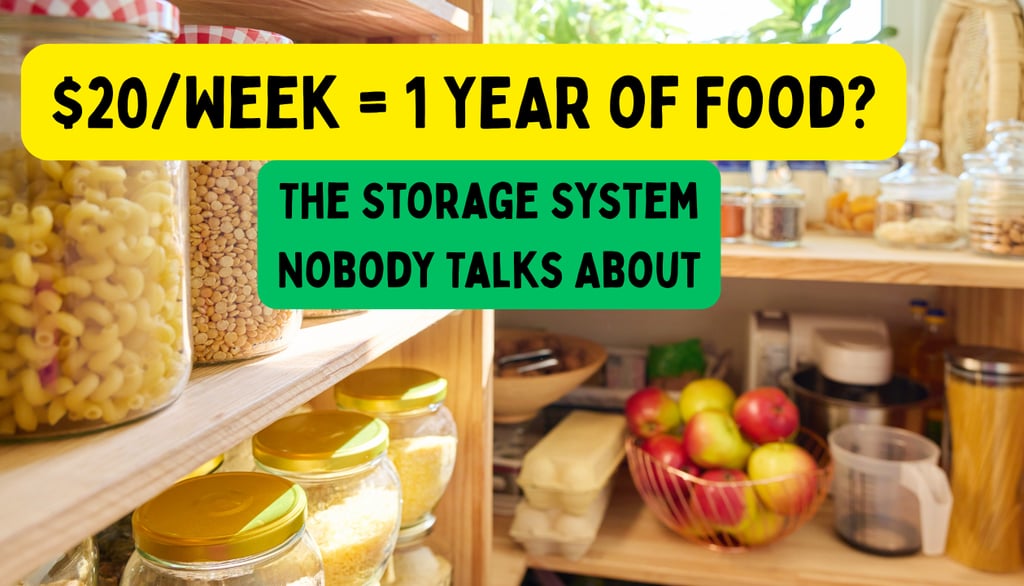
Budget Strategy #1: The Extra $10-20 Per Week Method
Every week, add $10-20 to your grocery budget specifically for storage food. That's it. At the end of a year, you've added $520-1,040 worth of food storage without feeling the pain.
Buy sale items. Use coupons. Shop bulk stores like Costco or Sam's Club. Stock up when prices are low.
Budget Strategy #2: The Tax Return Method
Got a tax return coming? Before you blow it on a vacation or new TV, consider putting even 25% of it toward a solid food storage foundation. One strategic shopping trip can set you up for months.
Budget Strategy #3: The Substitution Method
Instead of eating out twice this month, buy food storage. Instead of that streaming service you barely use, redirect it to your food security. Small sacrifices now = big peace of mind later.
Where to Shop for Best Prices
Costco/Sam's Club: Incredible bulk prices on basics
Walmart: Cheap and reliable for canned goods
Aldi: Ridiculously good prices on many items
Restaurant supply stores: Open to public in many areas, great bulk pricing
Online: Amazon, Thrive Market, or direct from freeze-dried food companies
Local grocery sales: Stock up during case-lot sales
The Mental Game: Overcoming Storage Paralysis
Here's something nobody talks about: the psychological barrier to starting. It feels overwhelming. It feels like prepper paranoia. It feels expensive. It feels complicated.
Let me reframe this for you: You're not a crazy prepper. You're a responsible adult who understands that grocery stores operate on a just-in-time delivery system with about 3 days of food on hand. You're someone who's seen what happens when supply chains hiccup. You're just being smart.
Start small. Build gradually. Don't compare your beginning to someone else's middle. Every can you add is one more meal you don't have to worry about.
Your 12-Month Action Plan
Months 1-3: Build to a solid month of food using the double-up method. Focus on what you already eat.
Months 4-6: Extend to 90 days. Get more intentional with meal planning and storage-specific purchases.
Months 7-9: Push toward 6 months. Add some freeze-dried options. Fill in gaps. Improve your rotation system.
Months 10-12: Reach for the 12-month mark. This is where you add more long-term storage items and really dial in your system.
Is this the only way? Nope. But it's a realistic approach that won't drain your bank account or overwhelm you.
The Bottom Line
Building a comprehensive food storage system isn't about being paranoid—it's about being prepared. It's about having options when life throws curveballs. It's about looking at your pantry and knowing your family won't go hungry if something goes sideways.
You don't need to do this perfectly. You don't need to do it all at once. You just need to start.
So here's your homework: this week, buy one extra thing. Just one. A can of beans. An extra bag of rice. A jar of peanut butter. Then next week, do it again. Before you know it, you'll look around and realize you've built something real.
And that feeling of security? That peace of mind when you open your pantry and see abundance instead of anxiety? That's worth every penny and every bit of effort.
You've got this. Now go start building.
Click to Explore Each Element of Your Emergency Food Storage Plan
Support@rusticrootshomestead.com
© 2024 Rustic Roots Homestead - All rights reserved.