
Guinea Hens: Complete Raising Guide
A comprehensive guide to raising guinea hens covering everything from brooding keets through flock management, with honest insights about the challenges and rewards of keeping these unique homestead birds.
BACKYARD LIVESTOCK
1/24/20266 min read
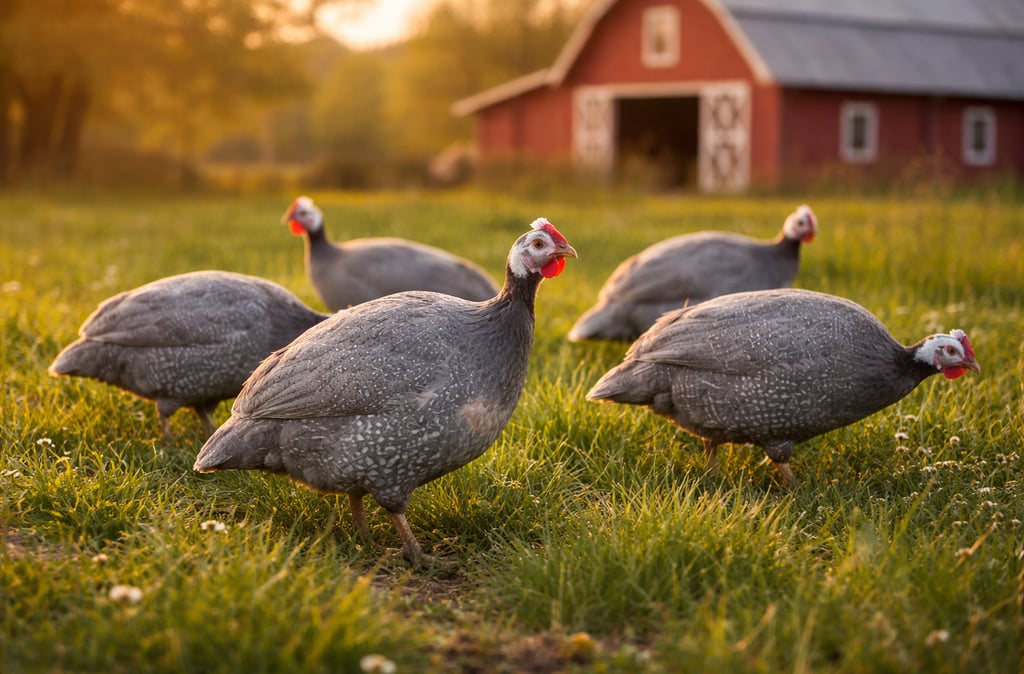
You know that moment when you're sitting on your porch with your morning coffee, and your chickens are doing their usual scratching and pecking routine, and you think, "This is nice... but what if I added some chaos?"
Enter guinea hens.
These polka-dotted bundles of personality have captured the hearts of homesteaders across the country, and for good reason. Once you understand these quirky birds, you might wonder how anyone manages a homestead without them. They're not chickens with an attitude problem—they're an entirely different experience, and honestly? That's what makes them so fascinating.
Why Guinea Hens Might Be Your New Favorite Homestead Addition
Let me be straight with you: guinea hens aren't for everyone. They're loud, they're independent, and they march to the beat of their own drum. But if you're looking for natural pest control that actually works, birds that can largely fend for themselves, and entertainment that rivals any streaming service, guineas might be exactly what your homestead needs.
Many homesteaders start with chickens and eventually add guineas to their flock. It's a natural progression—once you see what these birds can do for your property, the decision practically makes itself.
What makes guineas special:
Tick-eating machines – These birds are obsessed with ticks, making them invaluable in Lyme disease territory
Natural alarm systems – Nothing gets past a guinea hen without an announcement
Low-maintenance protein – They forage like champions and require less coddling than chickens
Snake deterrents – Guineas are aggressive toward snakes and will mob them relentlessly
Pest patrol – Grasshoppers, beetles, and other garden pests don't stand a chance
Getting Started: What You Need to Know Before Bringing Guineas Home
The biggest mistake new guinea owners make? Treating them exactly like chickens. Experienced homesteaders report this as the number one lesson they wish they'd learned earlier. If you're already raising chickens, you've got a head start, but guineas require their own playbook.
Breeding and Raising Young: The Circle of Life
The Keet Stage: Your First Eight Weeks
Pro Tip: Add marbles or small stones to your waterer for the first week. Keets are curious and clumsy, and this simple trick prevents drowning while still allowing them to drink.
Housing: Creating a Space They'll Actually Use
Here's the thing about guinea hens—they'd prefer to roost in trees than in any coop you build. It's not personal; it's just their nature. In the wild, they sleep in trees to avoid ground predators. However, with some patience and strategy, you can train them to come home at night.
The secret? Start them in the coop as keets and keep them confined there for 6-8 weeks after they're fully feathered. This imprints the coop as "home base" in their minds. Even then, some guineas will eventually go rogue and roost in trees, especially during summer months.
Coop Specifications
When planning your guinea coop, space matters more than you might think. For indoor housing, each bird needs a minimum of 3-4 square feet, though 4-5 square feet is ideal for happier, healthier birds. If you're building an outdoor run, budget at least 10 square feet per bird as a minimum, but 25 square feet or more is significantly better—or better yet, let them free-range entirely.
Roost bars should provide 8-10 inches of space per bird at minimum, but 12 inches is much more comfortable. Place these bars 2-4 feet off the ground at minimum, though guineas genuinely prefer heights of 4-6 feet since they love roosting high. For nesting boxes, plan one box for every 6-8 hens at minimum, or ideally one for every 4-5 hens.
One critical note about coop maintenance: Guinea hens produce dust and dander just like chickens, and their droppings carry the same health risks. Cleaning your coop safely is essential—always wear a mask to prevent respiratory issues from inhaling dried particles. Too many farmers have developed serious lung conditions from years of coop cleaning without proper protection.
Feeding Your Flock: Less Is Actually More
This is where guineas shine compared to chickens—they're phenomenal foragers. During warm months, a free-ranging guinea flock can meet 80-90% of their nutritional needs just by roaming your property. They're not picky eaters either. Bugs, seeds, small reptiles, tender greens—if it moves or looks edible, it's fair game.
Basic feeding guidelines:
Keets (0-8 weeks): Game bird starter, 28% protein
Juveniles (8-16 weeks): Game bird grower, 20-22% protein
Adults: Maintenance feed, 16-18% protein during summer; increase to 20% in winter
Treats: Cracked corn, sunflower seeds, and mealworms (in moderation)
During winter or when free-ranging options are limited, provide supplemental feed. Many guinea owners scatter feed on the ground rather than using feeders—guineas prefer ground feeding, and it keeps them engaged in their natural foraging behavior.
Pro Tip: Don't overdo the treats. Guineas that get too comfortable with handouts become lazy foragers, and you lose one of their primary benefits.
The Social Dynamics: Understanding Guinea Behavior
If you want to really enjoy your guineas, you need to understand how they think. Guinea fowl are flock-oriented birds with strong social hierarchies. They're also surprisingly intelligent—they recognize individual humans, remember routines, and communicate with an impressive range of vocalizations.
The Noise Factor
Let's address the elephant—er, guinea—in the room. Yes, guineas are loud. The hens make a distinctive two-syllable "buckwheat" call, while males produce a one-syllable chirp. When they spot a predator, a stranger, or sometimes just because it's Tuesday, the entire flock erupts into alarm calls that can be heard half a mile away.
Here's the perspective shift that helps many homesteaders: That noise is working. Every time guineas sound off, they're alerting you to something—a hawk overhead, the neighbor's dog wandering over, or yes, occasionally the mail truck they've seen a thousand times. Once you stop fighting the noise and start listening to what they're actually communicating, the relationship changes entirely.
Flock Size Considerations
Small homestead (under 2 acres): Start with 4-6 birds, maintaining a ratio of 1-2 males to 3-4 females. This provides enough birds for social structure without overwhelming a smaller property.
Medium property (2-5 acres): A flock of 8-12 birds works well, with 2-3 males and 6-9 females. This size gives you robust pest control while keeping the noise manageable.
Large property (5+ acres): Go bigger with 15-20 birds, including 3-5 males and 12-15 females. On larger acreage, you'll appreciate the expanded coverage these numbers provide.
Guineas do best in groups. A single guinea is a stressed guinea. They need that flock dynamic to feel secure and behave naturally.
Hatching Options
Natural incubation:
Guinea hens are decent mothers once they commit to sitting, but they're flighty. One loud noise can send her running off the nest permanently. If you want to let nature take its course, provide a safe, quiet area for brooding hens.
Artificial incubation:
Most homesteaders find better success with incubators. Guinea eggs take 26-28 days to hatch (longer than chicken eggs) and require:
Temperature: 99.5°F
Humidity: 55-60% (days 1-24), 70-75% (days 25-28)
Turning: 3-5 times daily until day 24
Health and Predator Protection: Keeping Your Flock Safe
Guineas are hardy birds with fewer health issues than chickens, but they're not invincible. Their wandering nature makes them vulnerable to predators, especially aerial hunters.
Common guinea health issues:
Frostbite (in extreme cold)
Respiratory infections (less common than in chickens)
Injuries from predators
Bumblefoot (if roosting on inappropriate surfaces)
Their best defense is their mobility and alarm system. A guinea flock spots hawks before most people do, and their coordinated alarm calls and evasive maneuvers are impressive. Still, you'll want adequate shelter and the option to lock them up during high-risk periods.
Predator deterrents:
Electric fencing around coop perimeter
Motion-activated lights
Livestock guardian animals
Secure night housing
Trimmed vegetation near coops (removes hiding spots)
Living With Guineas: The Real Talk
After hearing countless stories from experienced guinea owners, here's the consistent theme: These birds will frustrate you. They'll wander into your neighbor's yard. They'll screech at 5 AM. They'll lay eggs in places you'll never find. And despite all of this, most homesteaders grow to love them.
One homesteader shared how their guinea flock mobbed a hawk so aggressively that it never returned after threatening their chickens. Another reported eliminating tick problems entirely without using a single chemical treatment. Garden protection, reduced insect damage, and decreased snake encounters are common benefits reported across guinea-keeping communities.
Are guineas right for everyone? Absolutely not. But for homesteaders who value function over convenience and appreciate animals with personality, guineas earn their keep many times over.
Final considerations before getting guineas:
Check local ordinances—some neighborhoods prohibit them due to noise
Talk to close neighbors about your plans
Have realistic expectations about their behavior
Don't expect guinea eggs for breakfast (they're seasonal and hard to find)
Prepare for a long-term commitment—guineas can live 10-15 years
Guinea hens aren't just livestock; they're a lifestyle choice. They're the homestead equivalent of that friend who's a little eccentric, occasionally exhausting, but absolutely irreplaceable. If you're ready for the adventure, your mornings are about to get a lot more interesting.
Keets are adorable, delicate, and surprisingly spunky. Unlike chicks, they're more active from day one and seem to have an innate distrust of anything new. This wariness is actually a survival trait—in the wild, guinea fowl face threats from every direction.
Brooder requirements for keets:
Start at 95°F for the first week, reducing by 5°F weekly
Use pine shavings (never cedar—it's toxic)
Provide 24-hour light for the first 48 hours to help them find food and water
Offer game bird starter feed (28% protein minimum)
Keep water shallow—keets can drown in surprisingly little water
Support@rusticrootshomestead.com
© 2024 Rustic Roots Homestead - All rights reserved.