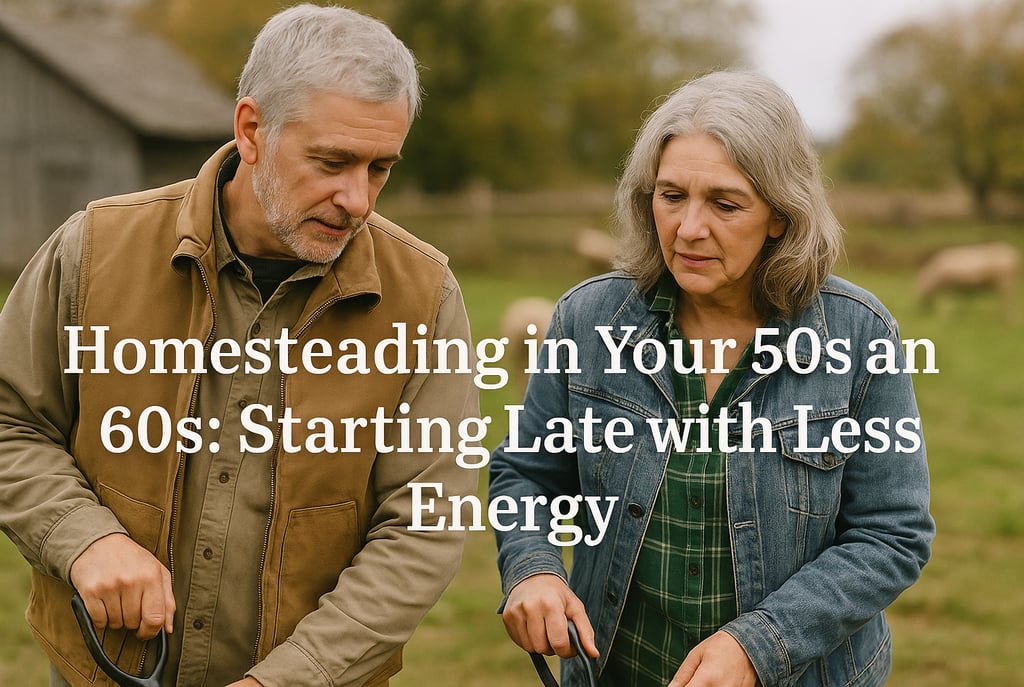
Homesteading in Your 50s and 60s: Starting Late with Less Energy
Discover how to start homesteading in your 50s and 60s—without burning yourself out. This practical, encouraging guide from Rustic Roots Homestead shows how to build a simpler, more self-sufficient life with less energy and more intention.
HOMESTEADING
12/14/20254 min read
If you’re reading this, chances are you’ve felt the pull.
Maybe it started with a garden idea.
Maybe it was rising grocery prices.
Maybe it was the realization that modern life feels loud, rushed, and fragile.
And somewhere in that quiet moment, you thought:
“I wish I’d started homesteading earlier.”
Here’s the truth we live by at Rustic Roots Homestead:
Starting late doesn’t mean starting wrong.
In fact, homesteading in your 50s and 60s can be one of the most rewarding, grounded, and realistic ways to build a more self-sufficient life — even with less energy than you once had.
Let’s talk honestly about what that looks like.
Why Homesteading Later in Life Just Makes Sense
There’s a reason so many people turn toward homesteading in their 50s and 60s.
You’ve lived long enough to know:
Convenience comes at a cost
Skills matter more than stuff
Security isn’t found in stores
Slowing down isn’t failure — it’s clarity
At Rustic Roots Homestead, we believe homesteading isn’t about chasing an ideal — it’s about reclaiming control over the basics.
Food. Skills. Routine. Purpose.
And you don’t need youthful energy to do that — you need intention.
Let’s Talk About Energy (Because We’re Not 30 Anymore)
One of the biggest concerns we hear is:
“I love the idea of homesteading, but I just don’t have the energy.”
That’s not a limitation — it’s a boundary.
Homesteading in this season of life works best when you:
Plan instead of push
Build systems instead of brute force
Choose sustainability over speed
Your homestead should give back more than it takes.
That’s a core principle here.
Start Smaller Than You Think You Should
One of the most common mistakes new homesteaders make — especially later in life — is doing too much too fast.
At Rustic Roots Homestead, we always say:
One well-managed project beats five half-finished ones.
You don’t need:
A big property
Livestock
Perfect soil
Fancy tools
You need one manageable step forward.
Low-energy ways to begin homesteading:
A single raised garden bed
Container gardening
Herb growing
Composting
Learning food preservation before growing food
One skill at a time (bread, broth, canning, soap)
Momentum builds confidence — and confidence builds capability.
Gardening That Works With Your Body
Gardening is often the first homesteading skill people return to later in life — and when done right, it’s incredibly rewarding.
Raised beds are your best friend
If you’re over 50, raised beds aren’t a luxury — they’re a strategy.
Benefits include:
Less bending and kneeling
Better soil control
Improved drainage
Easier maintenance
Longer growing season
Your body deserves consideration in the design.
Choose crops that don’t demand constant attention
Focus on plants that grow well without fuss:
Tomatoes
Zucchini
Green beans
Kale
Potatoes
Herbs like rosemary and oregano
Homesteading should feel steady — not stressful.
Backyard Chickens: A Rustic Roots Staple
Chickens are one of the most popular ways people at Rustic Roots Homestead build food security — and for good reason.
They provide:
Fresh eggs
Compost support
Pest reduction
A daily rhythm
But they must be set up wisely.
Chicken tips for homesteaders with less energy:
Start with a small flock (3–6 birds)
Choose calm, hardy breeds
Build an easy-access coop
Use the deep litter method
Automate watering when possible
Chickens should enhance your homestead — not overwhelm it.
Design Your Homestead for the Future You
This is something many people don’t think about early enough.
When you’re starting homesteading in your 50s or 60s, design matters.
Ask yourself:
How far do I walk daily?
What tasks are already tiring?
Where do I lift or carry weight?
Smart homestead layout ideas:
Keep gardens close to the house
Store tools where they’re used
Use carts and wagons
Reduce unnecessary steps
Create clear, even pathways
Every small improvement compounds over time.
Homesteading on a Realistic Budget
At Rustic Roots Homestead, we believe self-sufficiency should reduce financial stress, not increase it.
You don’t need:
New equipment
Pinterest-perfect builds
High-end setups
You need:
Skills
Patience
Thoughtful purchases
Budget-conscious homesteading tips:
Buy used tools
Learn before you buy
Focus on projects that save money first
Build slowly over seasons
Prioritize food and utility savings
Homesteading is a long game — not a shopping spree.
Food Preservation: The Perfect Slower-Paced Skill
Food preservation fits beautifully into later-life homesteading.
It’s calm.
It’s intentional.
It stretches your harvest and your budget.
Start with:
Freezing
Water bath canning
Dehydrating
Bone broth
Simple fermenting
These skills turn abundance into security — one jar at a time.
The Quiet Benefits No One Talks About
Homesteading later in life does something deeper than provide food.
It restores:
Confidence
Purpose
Daily rhythm
A sense of capability
Many people come to Rustic Roots Homestead because they want:
More peace
Less dependency
Skills they can rely on
A meaningful daily routine
Homesteading gives you something modern life often takes away: tangible progress.
You’re Not Behind — You’re Building Wisely
Here’s something we believe deeply:
You do not need to be fully self-sufficient to be successful.
Success might look like:
Growing some of your food
Reducing grocery bills
Gaining practical skills
Feeling prepared
Living more intentionally
That’s real homesteading.
Final Thoughts from Rustic Roots Homestead
If you’re starting homesteading in your 50s or 60s, you’re not late.
You’re experienced.
You’re thoughtful.
You’re intentional.
And those are powerful tools.
At Rustic Roots Homestead, we believe:
Slow is strong
Simple is sustainable
Skills outlast trends
Homesteading isn’t about doing everything.
It’s about doing what matters most — at the pace your life allows.
Ready to Get Organized?
Running a homestead takes planning—not guesswork.
The Complete Homestead Planner gives you:
Garden planning worksheets to map your growing season
Livestock care trackers for health and breeding records
Budget sheets to control homestead expenses
Goal-setting pages to stay focused on what matters
Seasonal checklists so nothing falls through the cracks
Get Your Complete Homestead Planner →
No overwhelm. No wasted effort. Just organized progress.
Support@rusticrootshomestead.com
© 2024 Rustic Roots Homestead - All rights reserved.