
Garden Layout Ideas: Maximize Your Space
One-sentence description: Discover practical garden layout strategies that maximize every square inch of your growing space through vertical growing, intensive planting, succession cropping, and smart design principles that boost productivity without expanding your footprint.
GARDENING
1/23/20268 min read
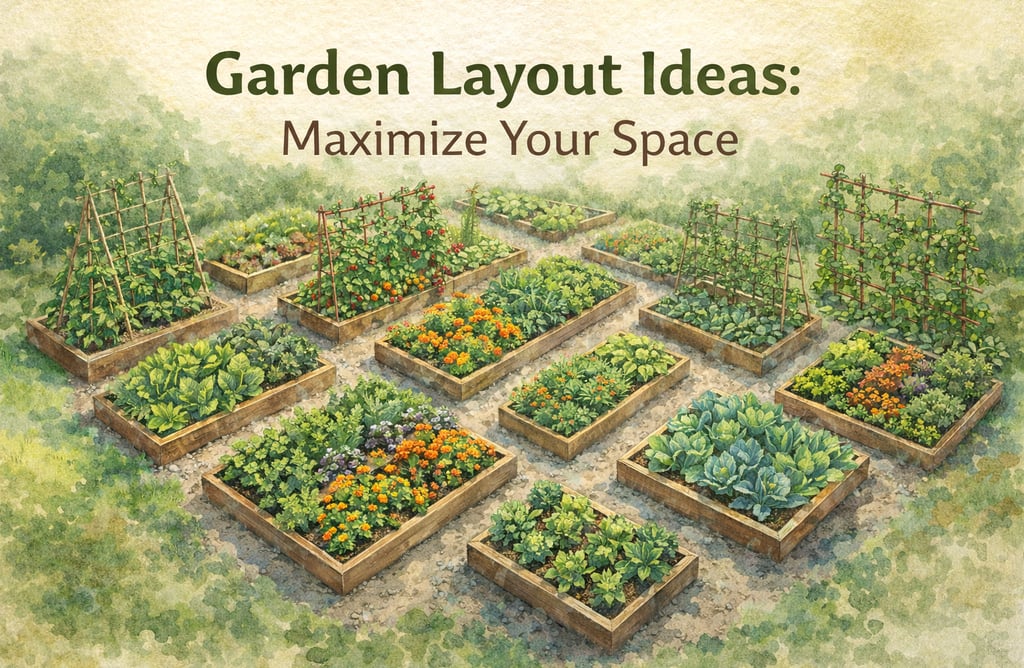
There's something magical about walking into a garden that just works—where every plant seems to be in perfect harmony, paths flow naturally, and somehow there's room for everything you wanted to grow. But here's the thing: that magic doesn't happen by accident. It's the result of thoughtful planning and smart layout choices that make the most of whatever space you've got.
Whether you're working with a sprawling backyard or a modest 10x10 patch, the secret to a productive garden isn't always about having more space—it's about using the space you have more intelligently. I've seen tiny urban gardens that produce bushels of vegetables and sprawling plots that barely yield enough for a salad. The difference? Layout strategy.
Let me share what I've learned about creating garden layouts that maximize every square inch while keeping things beautiful, manageable, and—most importantly—actually enjoyable to tend.
Understanding Your Garden's Personality
Before you start sketching out raised beds or plotting where the tomatoes will go, take some time to really understand your space. Every garden has its own personality shaped by sunlight patterns, soil conditions, and quirky microclimates.
Spend a few days observing how sunlight moves across your yard. That sunny spot at 9 AM might be in full shade by 2 PM. Those little details matter tremendously when you're deciding where to put sun-loving peppers versus shade-tolerant lettuce. I learned this lesson the hard way when I planted an entire row of tomatoes in what I thought was full sun, only to watch them struggle through a season of mediocre production.
Key factors to observe:
Sun exposure throughout the day (aim for 6-8 hours for most vegetables)
Natural drainage patterns after rain
Wind exposure and natural windbreaks
Existing trees, structures, or features you'll work around
Proximity to your water source
Once you understand these fundamentals, you can start making layout decisions that work with your space instead of fighting against it.
The Power of Vertical Growing
If I could give you just one layout tip that transforms cramped gardens, it's this: think vertically. We often focus so much on ground space that we completely forget about all that valuable real estate hanging in the air above our beds.
Vertical growing isn't just about saving space—though it absolutely does that. It also improves air circulation around your plants, makes harvesting easier on your back, and can create stunning visual interest. Plus, there's something deeply satisfying about training a cucumber vine up a trellis and watching it climb skyward.
Pro Tip: Place your tallest structures (trellises, towers, cages) on the north side of your garden so they don't shade out shorter plants. This simple positioning trick can dramatically increase your growing capacity.
Some of my favorite vertical growing methods include:
Cattle panel arches: Bend a 16-foot cattle panel into an arch for an instant tunnel perfect for beans, peas, or cucumbers
A-frame trellises: Create a walk-through structure that supports plants on both sides
Tower gardens: Stack tiers of containers for herbs and strawberries in minimal footprint
Fence utilization: Transform boring fence lines into productive growing space
The beauty of vertical growing is that it essentially gives you a second layer of garden without requiring any additional ground space. That unused air? It's now prime growing territory.
Intensive Planting Strategies That Actually Work
Traditional row gardening with wide paths between each row made sense when people were plowing with horses. But for most home gardeners, that spacing is wildly inefficient. You end up with more path than garden.
Intensive planting methods flip that equation. Instead of long rows separated by paths, you create concentrated growing areas you can reach into from all sides. This approach can triple or even quadruple your production in the same footprint.
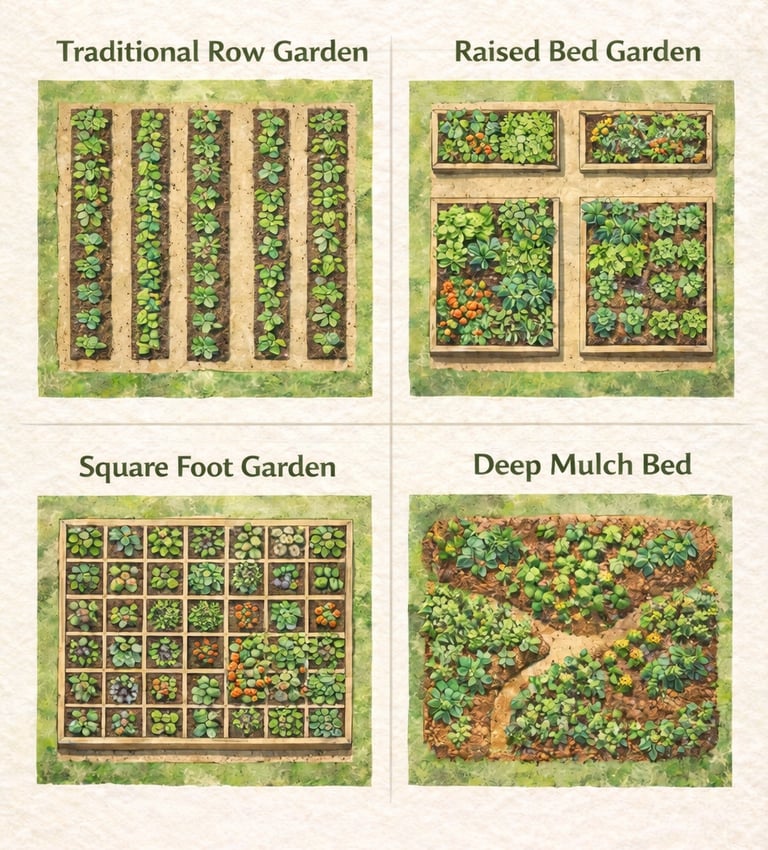
Traditional Row Gardening:
Path space takes up 40-50% of your garden
Growing space only 50-60%
Higher maintenance with more weeding
Moderate production levels
Raised Bed Gardens:
Path space reduced to 20-30%
Growing space expands to 70-80%
Moderate maintenance requirements
High production levels
Square Foot Gardening:
Minimal path space at just 15-20%
Maximum growing space of 80-85%
Lower weeding needs
Very high production in small areas
Deep Mulch Beds:
Path space around 15-25%
Growing space of 75-85%
Minimal weeding required
High production with less work
The key to making intensive planting work is soil quality. When you're asking plants to grow in close quarters, they need nutrient-rich soil that can support that density. Think of it like urban housing—if you're going to build up instead of out, you need solid infrastructure to support it.
I keep a detailed gardening journal to track which intensive planting combinations work best in my space. Some plants are great neighbors in close quarters; others need their personal space. Learning these partnerships takes trial and observation, but the payoff in productivity is absolutely worth it.
Succession Planting: The Timeline Multiplier
Here's a game-changing concept: you don't have to grow everything at once. In fact, you shouldn't grow everything at once if you want to maximize your space efficiently.
Succession planting means you're constantly transitioning crops in and out as seasons change. That spring lettuce bed? It becomes a summer cucumber spot, then transforms into fall carrots. Instead of one harvest per space, you're getting three or even four.
This approach requires some planning—you need to know roughly when each crop will finish and what can follow it. But once you get the rhythm down, it's like conducting a beautiful garden symphony where every space is always producing something.
Pro Tip: Plant quick-maturing crops like radishes or lettuce between slower-growing plants like tomatoes or peppers. The fast crops will be harvested before the slow ones need the space, essentially giving you "free" production.
The trick is thinking about your garden in terms of growing seasons rather than just the calendar year. Different plants have different seasonal preferences, and by rotating crops that thrive in different conditions, you keep every square foot working overtime.
Smart Bed Design and Dimensions
The standard 4-foot-wide raised bed has become popular for good reason—you can comfortably reach about 2 feet from either side, making the entire bed accessible without stepping in it. But that doesn't mean it's the only option, and depending on your space, it might not even be the best one.
I've experimented with various configurations over the years, and here's what I've found works:
Bed width considerations:
3 feet wide: Perfect for narrow spaces or against fences where you can only access from one side
4 feet wide: The sweet spot for most gardeners with access from both sides
5+ feet wide: Only practical if you're planning stepping stones or permanent access points within the bed
Length is more flexible:
Limited only by your space and materials
Consider breaking very long beds into sections for easier crop rotation
Leave adequate path width between beds (24-30 inches minimum for wheelbarrow access)
If you're starting from scratch and feeling overwhelmed by all these decisions, I highly recommend working through a complete homestead garden planning guide before you start building anything. Trust me, an hour of planning saves countless hours of regret later.
The Keyhole Garden: Space Efficiency Meets Accessibility
One layout design that doesn't get enough attention is the keyhole garden. Picture a circular bed with a wedge-shaped path cutting into the center, like a keyhole shape when viewed from above. You end up with all the growing space of a large circular bed but with easy access to every plant.
The brilliant part? You can create a large, productive garden area with minimal path space. The center of the circle—typically the hardest spot to reach in a round bed—becomes the most accessible point thanks to that keyhole entrance.
Keyhole gardens also lend themselves beautifully to incorporating a central compost basket. As organic materials break down in the middle, nutrients gradually spread outward to feed surrounding plants. It's like installing a slow-release fertilizer system right in the heart of your growing space.
Companion Planting for Space Optimization
Beyond just cramming more plants into less space, smart companion planting helps you maximize productivity by creating beneficial relationships between neighboring plants. Some plants actually help each other thrive when grown in close proximity.
Proven companion combinations:
Tomatoes + Basil: Basil may improve tomato flavor while helping repel pests
Corn + Beans + Squash: The classic "Three Sisters" where each plant supports the others
Carrots + Onions: Onions help deter carrot flies
Lettuce + Tall plants: Lettuce appreciates afternoon shade from taller neighbors in hot climates
The opposite is also true—some plants are terrible neighbors and will compete or inhibit each other's growth. Keeping notes about what works and what doesn't in your specific conditions is invaluable for future planning.
Creating Productive Perimeter Zones
Don't overlook the edges of your garden space. Perimeter areas are perfect for establishing permanent plantings that produce year after year without requiring the intensive management of annual vegetables.
Consider lining your garden borders with:
Asparagus beds (produces for 20+ years once established)
Perennial herbs like oregano, thyme, and sage
Strawberry patches
Rhubarb crowns
Berry bushes along fence lines
These perimeter plantings serve double duty—they're productive while also creating natural boundaries for your garden space. Plus, since they're permanent fixtures, you won't be disturbing them when you're working the annual garden beds.
The Importance of Access and Flow
A beautiful, productive garden is wonderful. But you know what makes it even better? Actually enjoying the time you spend in it.
Think carefully about how you'll move through your garden space. Will you be pushing wheelbarrows loaded with compost? Carrying harvest baskets? Dragging hoses? Your layout should accommodate these practical realities.
I learned this lesson after creating a gorgeous garden design that required me to carry every bucket of water and harvest basket through a narrow 18-inch gap between beds. It was technically functional but practically frustrating. The next season, I redesigned for better flow, and gardening became genuinely more enjoyable.
Design considerations for better flow:
Main paths at least 30 inches wide for wheelbarrow access
Strategic placement of water sources or hose connections
Tool storage located near where you'll use those tools
Convenient composting access from the garden
Thoughtful placement of frequently harvested crops near kitchen access
Embracing Flexible Design
Here's something I wish someone had told me when I started: your first garden layout doesn't have to be perfect, and it definitely won't be permanent. Gardens evolve. You'll discover that path needs to be wider, or that bed would work better in a different spot, or that you want to try something completely new.
Build flexibility into your design from the start. Use materials that can be reconfigured. Avoid permanent structures until you're absolutely certain about placement. Give yourself permission to experiment and adapt.
Some of my most productive garden features came from happy accidents or mid-season adjustments. That "mistake" where I planted too many beans actually showed me I could handle higher density planting. The bed I moved because it wasn't getting enough sun ended up becoming my most successful herb garden.
Making Your Layout Work for You
Ultimately, the best garden layout is the one that matches your goals, fits your space, and—critically—works with your lifestyle and energy level. A complex design requiring constant attention might look impressive but will quickly become a burden if you only have a few hours per week to dedicate to gardening.
Start with the fundamentals: understand your space, maximize vertical growing, embrace intensive planting, and design for good flow. Then customize based on what you want to grow, how much time you want to spend maintaining it, and what brings you joy.
Because that's really what this is about, isn't it? Creating a space that not only produces abundance but also gives you a reason to step outside, get your hands dirty, and connect with the simple magic of growing your own food.
Your garden layout is a living thing—part science, part art, and wholly yours to shape. Make it work for your space, your goals, and your life. The tomatoes won't mind if your beds aren't perfectly symmetrical, and the lettuce will grow just as happily whether you followed traditional rules or made up your own.
Happy planting, and may your garden be as productive as it is beautiful.
Support@rusticrootshomestead.com
© 2024 Rustic Roots Homestead - All rights reserved.