
Homestead Garden Planning: Start to Finish
Homestead Garden Planning - A practical, personable guide to planning a productive homestead garden from start to finish, covering everything from crop selection and planting schedules to soil preparation and seasonal succession planning.
GARDENING
1/22/20267 min read
There's something magical about that first morning in early spring when you step outside with your coffee, survey your land, and start dreaming about the garden you're about to create. After years of planning gardens on our five-acre homestead in Michigan, I've learned that the difference between a garden that thrives and one that leaves you frustrated isn't just luck—it's planning.
But here's the thing: garden planning doesn't have to be complicated. You don't need fancy software or a degree in horticulture. What you do need is a practical approach that takes the guesswork out of the process while still leaving room for the joy of growing your own food.
Why Planning Your Garden Actually Matters
I'll be honest—my first garden was a disaster. I bought whatever seedlings looked pretty at the nursery, planted them wherever there was space, and hoped for the best. By midsummer, I had zucchini plants shading out my tomatoes, beans climbing up my peppers, and more cucumbers than any human family could possibly eat.
That's when I realized that successful gardening isn't about working harder; it's about working smarter. A well-planned garden produces more food, requires less maintenance, and actually makes the whole experience more enjoyable. Plus, when you know what you're doing from the start, you avoid those expensive mistakes that come from impulse planting.
Starting With the End in Mind
Before you even think about seeds or soil amendments, ask yourself: what do we actually eat? This sounds obvious, but you'd be surprised how many people plant vegetables they never cook with just because they seem like something a "real gardener" should grow.
My wife Michelle and I sit down each January and make a list. We look at what we bought most at the grocery store last year, what we preserved, and what we wish we'd had more of. This simple exercise has saved us from planting entire beds of vegetables that would have gone to waste.
Questions to ask yourself:
What vegetables does your family eat weekly?
Which produce items cost the most at the store?
What do you want to preserve for winter?
How much time can you realistically dedicate to maintenance?
What grew well for you last season (if applicable)?
Understanding Your Growing Season
One of the biggest mistakes new gardeners make is treating all vegetables the same. The reality is that your garden needs to work in seasons, not as one big planting day in May.
In Michigan, we have a relatively short growing season—roughly 140-160 days between our last spring frost and first fall frost. But within that window, I'm actually running three different garden "campaigns": cool season crops in spring, heat-loving plants in summer, and fall crops as things cool down.
Cool Season Crops (plant 4-6 weeks before last frost):
Lettuce, spinach, and arugula
Peas and fava beans
Radishes and turnips
Broccoli and cauliflower
Onions and leeks
Warm Season Crops (plant after last frost):
Tomatoes and peppers
Cucumbers and squash
Beans and corn
Basil and other tender herbs
Fall Crops (plant mid to late summer):
Kale and collards
Carrots and beets
Brussels sprouts
More lettuce and spinach
This staggered approach means you're harvesting something fresh from spring through fall, rather than drowning in produce for six weeks and then having nothing.
Mapping Out Your Space
Now comes the fun part—actually designing your garden layout. I used to sketch this out on graph paper, but honestly, even a rough drawing on the back of an envelope works fine. The key is to think through where everything goes before you start digging.
Factors to consider:
Sunlight: Most vegetables need 6-8 hours of direct sun. Note where shade falls throughout the day and plan accordingly. Leafy greens can handle partial shade; tomatoes and peppers cannot.
Water access: Place thirsty crops closer to your water source. I learned this the hard way when I planted melons at the far end of our property. The daily watering trek got old fast.
Companion planting: Some plants genuinely help each other. Tomatoes and basil aren't just great on a plate—the basil actually helps repel pests. Beans fix nitrogen in the soil that heavy feeders like corn appreciate.
Succession planting: Leave space to replant quick-maturing crops. When my spring lettuce bolts in June, I can use that same space for a second round of beans or a fall crop of carrots.
Pro Tip: Take photos of your garden throughout the season. Next year when you're planning, these photos will remind you what worked, what didn't, and where you had space you could have utilized better.
The Soil Situation
Here's something most beginner garden planning articles skip over: your soil is everything. You can have the perfect layout and the best seeds, but if your soil isn't ready, you're fighting an uphill battle.
I spent my first two years amending our clay-heavy Michigan soil with compost, aged manure, and mulch. Now, years later, that investment pays dividends every season. The soil is loose, dark, and full of life—earthworms everywhere, which is exactly what you want to see.
If you're starting fresh, getting your garden beds properly prepared is crucial. I've written a detailed guide on exactly how to get a garden bed ready for planting that walks through the entire process, from testing your soil to creating the perfect growing environment.
The short version: test your soil, add organic matter, and don't skip the mulch. Your future self will thank you.
Creating Your Planting Schedule
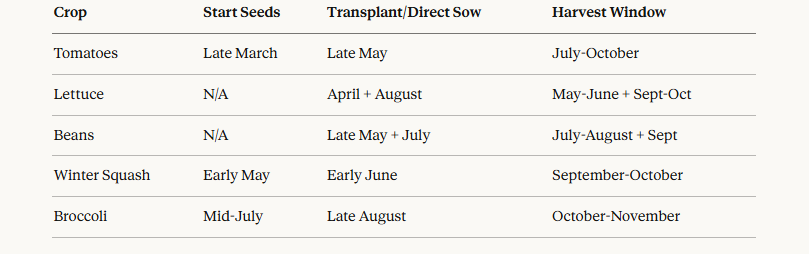
This is where planning transforms from theory into action. A planting schedule tells you exactly when to start seeds indoors, when to transplant, and when to direct sow in the garden.
Here's a simplified version of what mine looks like:
Notice how I'm planting lettuce and beans twice? That's succession planting in action. By the time my spring lettuce is done, I'm ready to put in summer crops. When those summer crops wind down, fall vegetables take their place.
Seed Selection: Hybrid vs. Heirloom
Walk into any seed catalog and you'll face hundreds of varieties. It's overwhelming, but here's the practical approach I use: grow what's proven to work in your area, with a few experimental varieties for fun.
Hybrids are bred for specific traits—disease resistance, uniform size, faster maturity. They're workhorses. If you want reliable tomatoes that resist blight, hybrids are your friend.
Heirlooms are open-pollinated varieties passed down through generations. They offer incredible flavor diversity and you can save seeds. The trade-off? They're sometimes less disease-resistant and more finicky.
I grow both. My main tomato crop is a reliable hybrid, but I always plant a few heirloom varieties for those unforgettable flavors you can't find in any store.
Planning for Preservation
Unless you have a massive family, you're going to have more produce than you can eat fresh. Planning for preservation from the start makes the abundance manageable instead of overwhelming.
When I'm mapping out my garden, I'm thinking about:
Which tomatoes are going into salsa and sauce?
How many cucumbers do I need for pickling?
Should I grow extra green beans for freezing?
Do I have enough storage space for winter squash?
This kind of thinking influences variety selection. I'm not growing cherry tomatoes for sauce—I need paste tomatoes. I'm not planting slicing cucumbers for pickles—I need pickling varieties.
Building Your Garden Planning System
After years of scribbled notes and forgotten details, I finally got serious about creating a complete planning system. Having everything in one place—garden maps, planting schedules, seed inventories, harvest records—has been a game-changer.
You can build your own system with a simple notebook, or if you want something comprehensive that's already organized, I put together The Complete Homestead Planner with everything I wish I'd had when I started out. It includes garden planning worksheets, seasonal task lists, and harvest tracking pages that keep all your information organized year after year.
Dealing With Common Planning Pitfalls
Even with a solid plan, you'll face challenges. Here are the ones I see (and make) most often:
Overplanting: It's tempting to squeeze in "just one more" plant. Resist. Crowded plants compete for nutrients, water, and airflow. They produce less and get sick more often.
Ignoring crop rotation: Planting the same thing in the same spot year after year depletes specific nutrients and builds up pests and diseases. Rotate plant families to different beds each season.
Forgetting about weeds: Plan time for maintenance. A garden that's too big to manage becomes a weedy mess by July. Start smaller than you think you need.
Not accounting for vertical space: Trellising saves space and improves air circulation. Cucumbers, beans, peas, and even some squash can grow up instead of out.
Pro Tip: Keep notes throughout the season. When you harvest your first tomato, write it down. When the cucumber beetles attack, note it. These observations become invaluable planning data for next year.
The Living Plan
Here's the truth about garden planning: no plan survives first contact with reality perfectly intact. The weather does something unexpected. A pest you've never seen shows up. A variety that was supposed to thrive completely flops.
That's okay. The point isn't to create a perfect plan—it's to have a framework that guides your decisions and helps you learn from each season. My garden plan is a living document. I adjust it as the season progresses, make notes about what to change next year, and gradually refine my approach.
Some of my best garden discoveries have come from happy accidents or necessary adjustments. That "mistake" of planting sunflowers too close to the beans? Turns out the beans loved climbing up the sunflower stalks. Now it's intentional.
Making It Happen
Garden planning can feel like a lot of work upfront, but here's what I've found: every hour spent planning saves you five hours of frustration during the growing season. You're not scrambling to figure out what to plant where. You're not dealing with the chaos of poor placement decisions. You're not overwhelmed by maintenance you didn't anticipate.
Instead, you're walking through your garden with confidence, knowing what needs attention and when. You're harvesting a steady supply of vegetables that your family actually eats. You're building soil health and learning what works on your specific piece of land.
The garden becomes less stressful and more joyful—which is the whole point, isn't it?
So grab your coffee, find a quiet morning, and start dreaming about your garden. Map it out, schedule it, plan for the seasons. Your summer self—the one standing in the garden with a basket full of fresh vegetables—will be grateful you did.
Support@rusticrootshomestead.com
© 2024 Rustic Roots Homestead - All rights reserved.